
Digital Marketing for Real Estate has become an essential strategy for builders, property dealers, brokers, and real estate companies that want to attract qualified buyers online. Today, most customers search for properties, compare prices, check locations, and research developers before making a decision. A strong online presence can help real estate businesses reach these potential customers at the right time.
Why Digital Marketing Matters for Real Estate
Traditional marketing methods such as newspapers, hoardings, and pamphlets can generate awareness, but they often make it difficult to measure results. With Digital Marketing for Real Estate, businesses can track impressions, clicks, leads, conversions, and campaign performance.
Digital marketing also allows real estate companies to target people based on location, interests, demographics, search behavior, and buying intent. This makes advertising more focused and potentially more cost-effective.
SEO for Real Estate Businesses
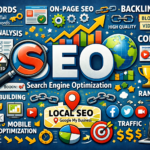
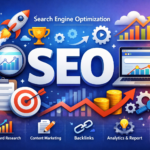
Search Engine Optimization (SEO) is one of the most important parts of Digital Marketing for Real Estate. Potential buyers commonly search terms such as:
- Flats for sale in Noida
- Property dealers in Greater Noida
- 2 BHK flats near me
- Commercial property in Noida
- Luxury apartments in Noida
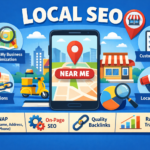
Creating optimized website pages and helpful blogs around relevant search terms can improve organic visibility. Local SEO is equally important because property searches are strongly connected to specific locations.
A properly optimized Google Business Profile, location pages, reviews, and local citations can help real estate businesses attract nearby customers.
Google Ads for Property Leads
Google Ads can help real estate companies appear when users actively search for properties. For example, someone searching for “apartments for sale in Noida” may already have strong purchase intent.
With Digital Marketing for Real Estate, Google Ads campaigns can be divided into different ad groups according to property type, location, budget, and buyer intent. Proper keyword selection, negative keywords, compelling ad copy, and conversion tracking are important for controlling advertising costs.
Social Media Marketing
Platforms such as Facebook and Instagram are useful for showcasing properties visually. Real estate businesses can publish property walkthroughs, construction updates, amenities, customer testimonials, location advantages, and short videos.
Reels can be particularly useful for presenting properties in an engaging format. Paid social media campaigns can also target different customer segments and generate enquiries through lead forms, landing pages, or WhatsApp.
Content Marketing
Content helps establish credibility and answer common customer questions. A real estate company can publish articles about home-buying tips, property investment, loan information, location guides, construction updates, and market trends.
Useful content can bring visitors to the website and gradually move them toward becoming leads.
Landing Pages and Lead Generation
A dedicated landing page can improve the performance of Digital Marketing for Real Estate campaigns. Each landing page should clearly explain the property, location, amenities, pricing information, and benefits.
A strong call-to-action such as “Book a Site Visit,” “Get Property Details,” or “Request a Callback” can encourage visitors to take action.
Conclusion
Digital Marketing for Real Estate combines SEO, Google Ads, social media, content marketing, landing pages, and conversion tracking to create a complete online lead-generation system. Real estate businesses that consistently provide useful information and target the right audience can build stronger visibility and generate more qualified enquiries.
The key is not simply to get more traffic, but to attract the right potential buyers and convert them into genuine property leads.